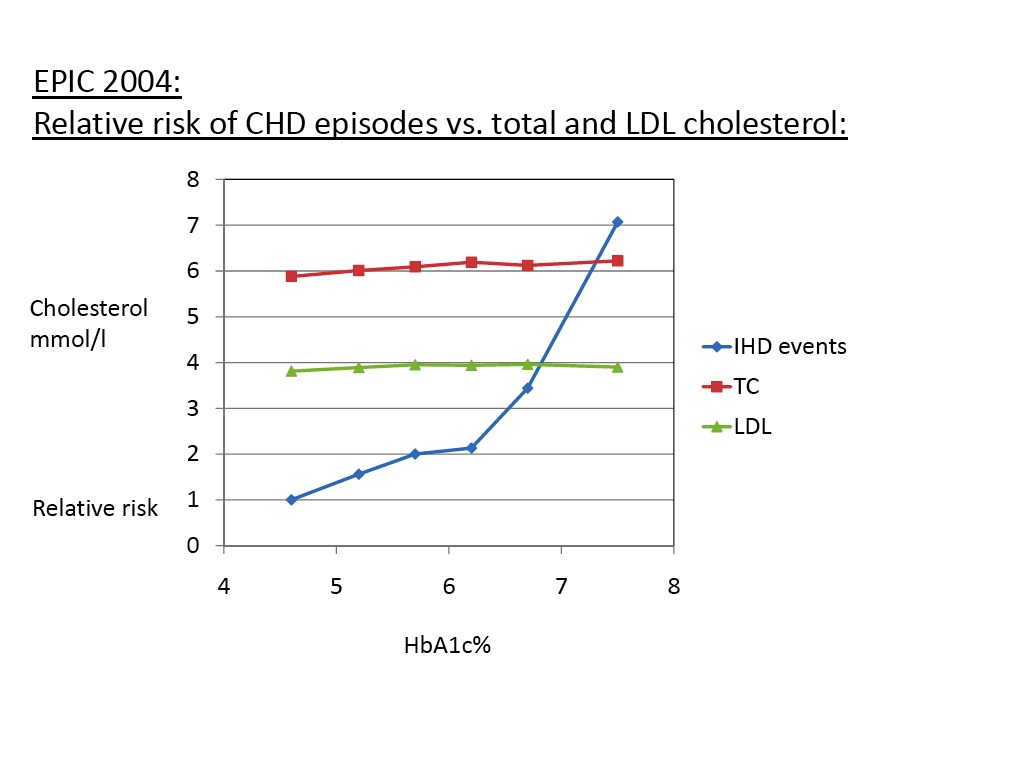
Something that happens to many people on a low-carb diet is that their insulin resistance increases slowly over time. In an initial low-glucose environment, the large muscles begin to burn fat (ketosis). As they do so, they need less glucose, and therefore become resistant to insulin. The result is that fasting blood glucose levels increase, along with HbA1c.
[[MORE]]In addition to further lowering your carb intake, which should help, isometric training is another good approach to addressing this (isometrics is better at increasing insulin sensitivity than aerobics). It also helps a lot to exercise only after you’ve been fasting for 12 to 15 hours (exercise after fasting improves insulin sensitivity more than when you’re not fasting). The idea is to work on two fronts: decreasing carb intake to further lower blood glucose (BG) and insulin, and working on the muscles to increase insulin sensitivity.
If you’re into supplements, you can also add some insulin-sensitizing ones, such as resveratrol, melatonin (also helps with sleep), vanadyl sulfate, lipoic acid, and N-acetyl-carnitine. Those last two also help reduce the glycation that creates HbA1c, as do benfotiamine (B1), B6 and carnosine.
You might also be interested to know that the shakiness you might feel when your BG gets low is usually due to the release of adrenaline, which is part of the mechanism your body uses to raise BG in the absence of food. It’s one cause of insomnia in some people. Improving insulin sensitivity and cutting back on protein (which releases insulin) will help there too.
Another tidbit: there’s good documentation out there that a glucose tolerance test isn’t very meaningful when you’ve been on an extended low-carb diet. The usual suggestion is to have carb-rich meals for at least two days before the test (at least 150 gr carbs each day), to help re-establish insulin sensitivity. A few scientists I know also recommend having one day a week of high-carbs, partly for the same reason – the idea is to come out of ketosis, but only for 24 hrs per week or so. I don’t do that myself, although I think it might make sense for some people.