Fatty infiltration of the liver is known to cause varying degrees of liver dysfunction. How do you prevent or reverse it? What about fatty infiltration in other organs?
One place to start would be to consider the possible role of fructose. Some people on a Paleo diet exclude it, but many (most?) don't.
Fructose is converted to fructose-1-phosphate in the liver, a process which can deplete the phosphate stores that normally would be used to create ATP, which is the body's primary source of metabolic energy. A lack of ATP triggers the degradation of adenine, which produces uric acid, which can lead to gout -- which is associated with metabolic syndrome. The fructose metabolites are then moved into fat storage, by increasing triglyceride levels in the blood. Fructose also increases insulin resistance.
http://www.ncbi.nlm.nih.gov/pubmed/16234313?dopt=AbstractPlus
As a result of the process above, fructose can then lead to fatty liver:
http://www.ncbi.nlm.nih.gov/pubmed/19403641
[[MORE]]Consuming PUFAs and alcohol can also contribute to liver injury and inflammation:
http://high-fat-nutrition.blogspot.com/2009/12/cirrhosis-and-fructose.html
I should mention that there's a difference between eating low-carb and being in ketosis. When you're in ketosis, the body is burning fat as a primary fuel, rather than glucose. Triglycerides are fats, and if you don't burn them up, they tend to accumulate. Triglyceride levels can go from being high to normal within 72 hours of going into ketosis.
Based on the research I've done, it is perfectly safe to be in ketosis for a few months at a time, and probably even longer. However, alternating out once in a while is prudent -- an expert I know advocates going out of ketosis twice a week or so, or maybe one week a month. In my case, making the transition isn't particularly easy, so I do it less often (out 1 month of every 6 feels like it would be about right, although it's more easily said than done).
A few interesting tidbits about ketosis: the brain's adaptation to ketones starts on about day 3, but isn't complete for about 2 weeks; I tend to feel a bit fuzzy during that adjustment period. After 2 weeks, though, the brain can derive 25% of its energy from ketones. The heart ejection fraction can increase by 30% within a few hours after an injection of ketones (helps with CHD). If you force cells to burn glucose, they turn cancerous relatively quickly; if you force them to use the same fuel they used in the fetal state (ketones), the cells tend to undifferentiate (stop being cancerous). Alkaline cancers, in particular, live on glucose; getting your blood glucose level down from 110 to 80 makes a huge difference in the cancer's ability to grow.
Leptin resistance can also be a factor in the body's use and accumulation of fat. Mold toxins can cause adverse effects on the leptin system, as well as aggravating insulin resistance. There's a book called "Mold Warriors" that talks about this (redirects to Amazon):
http://tinyurl.com/43bus2p
This may include various forms of subclinical intestinal yeast overgrowth (meaning it can be a problem with no obvious symptoms). Everyone has yeast in their gut and on their skin; it's a question of species and quantity, as well as the competitive balance with normal gut bacteria. Some fungal species, such as Candida rugosa, are resistant to certain antifungals, so just because you've been through a round of treatment doesn't mean the problem has gone away. Sometimes, treatment just changes the balance around, and can even make you worse (always a good idea to supplement probiotics when taking antifungal meds).
In addition, prostaglandin E2 (PGE2) can inhibit lipolysis (breaking down fats). You may be able to check yourself to see if your PGE2 levels are a factor. A niacin flush can significantly lower your PGE2 level (as well as histamine). One way to do the test is to start by dissolving a 24 hr dose of regular niacin (not niacinamide or no-flush niacin) in 8 oz of water. Then, take a sip and wait about 30 to 40 minutes for a flush. Then take a larger sip, wait, flush and repeat. You may need to repeat again for a few days, with steadily increasing doses per day. When you're done, the flushing should stop or nearly stop. After that, if PGE2 is a problem, you should be symptom-free for many hours. In general, the larger the flush, the higher your PGE2 levels.
Some people also have mitochondrial deficiencies. I have recently come to suspect that "subclinical" mitochondrial disease is much more widespread than is commonly accepted (particularly in brain-related illnesses, including schizophrenia, autism spectrum disorders and possibly epilepsy). This can also contribute to difficulties in effectively burning fat for fuel; you can run into a bottleneck of sorts. Experimenting with mitochondrial nutrients while in ketosis might help to both identify and treat some of those issues -- for example, carnitine, medium chain triglycerides, NADH, Lipoic Acid, B1, B2, B3 (NADH precursor) as niacin vs. niacinamide, B5, CoQ10 (std vs. ubiquinone) and N-Acetyl-Cysteine. You can assess yourself to see if they're helping by looking at your cognitive function (memory or something similar), strength, stamina, and/or body temperature.
Showing posts with label Health. Show all posts
Showing posts with label Health. Show all posts
Thursday, 6 October 2011

Wednesday, 14 September 2011
Update on brushing my teeth with soap
As I posted some time ago, I was brushing my teeth with soap instead of toothpaste. It worked great on my teeth and gums. However, I decided to stop a while back.
Because soap is a natural antibacterial, it was apparently disturbing the natural balance of bacteria in my mouth and throat -- to the point where I eventually got a bad case of thrush (yeast overgrowth), which was an unpleasant experience, to say the least.
This may not happen with everyone who brushes with soap; I think I'm sensitive in this area. It may also depend to some degree on the type of soap you use. You could probably also offset the antibacterial effect of soap by having a spoonful of acidophilus yoghurt after you brush.
The toothpaste I'm using now doesn't have sodium lauryl sulphate or fluoride, but it does have glycerin. Even so, I was encouraged at a recent dental hygiene appointment with no gum pocket depths greater than 3mm (5mm is considered the threshold for gum disease).
Friday, 9 September 2011
Would you take statins for high cholesterol?
If I had high cholesterol, I wouldn't statin drugs, for two reasons. First, from what I've seen, the research is not clear that reducing cholesterol levels has any real long-term benefit with regard to heart disease. Second, the drugs themselves have a terrible side-effect profile. For those who decide to go that way, though, be sure to take Co-Q10 to help minimize the damage.
I had a heart scan done myself about 5 yrs ago, and would highly recommend the procedure. Although mine came back clear, I could imagine that having someone tell you that they suspect plaque has started to form in the vessels affecting your heart is nothing like actually seeing and measuring them.
Instead of statins, look into the Pauling/Rath protocol for reversing heart disease. Basically, Lysine, Proline, Vitamin C, Co-Q10, Carnitine, Niacin and Vit E.
[[MORE]]Arginine supplementation can also be useful. It helps by increasing nitric oxide release in tissues, which in turn promotes wound healing (such as in the arterial walls; plaques form in response to wall damage), and helps to dilate blood vessels. Dr Joe Prendergrast's work in this area is very interesting.
If the heart scan does show some calcification, consider having EDTA chelation therapy, which can help dissolve the plaques. It's a slow process (once a week for 20+ weeks), but it has a pretty good track record, particularly when the plaques aren't too thick. The most effective approach is by IV, but it can also be done using EDTA suppositories -- the latter takes longer and requires some care in administration, but you might prefer it to getting stuck with an IV needle. Used in conjunction with a heart scan, you can actually track your progress.
Watch your blood pressure. High BP can damage blood vessels; repeated micro-damage means more plaques.
Also, watch/limit your calcium intake and Vit D level. There is a bunch of interesting work in this area. Tom Levy of Vit C fame was planning a book on the subject.
Sunday, 17 July 2011
Leg cramps
I used to get leg cramps, and have researched the causes thoroughly.
What I found is that the most common cause is not having enough magnesium. The second most common cause is getting too much calcium. Other micronutrient or electrolyte imbalances can also play a role.
Calcium is required by muscles in order for them to contract, and magnesium is required in order for them to relax. There are many factors that can lead to magnesium deficiency, including exposure to toxins in your food or environment. Some people also tend to leak magnesium from their kidneys when they are totally well, and so can be in a chronic state of deficiency, even when on a good diet.
If you're having cramps, you might try dramatically increasing your magnesium intake, while reducing calcium as much as you can, until the cramps abate (if you get too much, you'll find it's a natural laxative). There are many different forms of magnesium supplements; some are much more readily absorbed than others. I prefer the amino acid chelates, although I've also found mag citrate ("Natural Calm") to be effective when taken in sufficient quantity.
[[MORE]]At high doses, calcium is actually a cellular toxin. I worked with a very bright doc once (Robert Cathcart, of Vit C fame), who had a theory that calcium toxicity was responsible for osteoporosis, and contributed much to heart disease.
Another thing to try is Epsom salt baths: take about 250 grams of Epsom salts (about a half-pound) and dissolve them in a bath full of warm-to-hot water, and soak for 30 to 60 minutes. Finish the bath at least an hour before bed, to allow your body time to cool down before you go to sleep. When the cramping in my legs used to get bad, I found this was one of the most effective things I could do to help.
Tuesday, 13 July 2010
A rebuttal of the China Study
The "China Study" claims to prove the superiority of vegetarianism. Only it doesn't. Here's a link to an interesting rebuttal:
http://www.proteinpower.com/drmike/obesity/another-china-study/
http://www.proteinpower.com/drmike/obesity/another-china-study/
Sunday, 11 July 2010
Correcting mineral deficiencies
Whether correcting deficiencies with whole foods alone is possible depends on many factors: how bad the deficiencies are, which minerals are deficient, your health status, environmental conditions, etc. For example, if you live in an area with selenium-poor soils, and that's your only deficiency, then eating whole foods that contain selenium should be enough. But if you're unhealthy and have a number of deficiencies that have advanced to the point where your ability to absorb nutrients from your food is impaired, then food alone may not be enough.
There are things you can do to improve how well nutrients are absorbed from your food. As I've mentioned before, chewing really well is an important one. Eating a good variety of food is another (avoid a mono-diet). Juicing (veggie juices) can also help.
I tried a whole food approach for quite a while, without supplementation, and it wasn't enough for me--but I was very unwell at the time. I had to add supplements before I started to make any progress. In fact, after everything corrected, I stopped taking supplements and went back to whole foods only, and found that several minerals in my blood dropped back down well below normal. So for me, I need to continue certain supplements even today.
One issue with using whole foods alone is that there can be considerable
variation in the mineral content of your food. Also, certain types of food are good sources for certain minerals; if you eliminate those foods from your diet, it can be a challenge to get enough of the associated minerals. For example, molybdenum is present in beans; if you don't eat beans, it can be difficult to get enough.
Of course, if you're healthy and live in good environment, I don't think
this is an issue. Paleo people certainly didn't need supplements to survive and thrive.
Saturday, 10 July 2010
Mineral absorbtion and transdermal magnesium
I don't have first-hand experience with transdermal magnesium (Mg). However, many substances are absorbed by the skin and make their way into the blood--including things like formaldehyde from clothes sizing, fire retardant from kids nightclothes (required by law!), perfumes, etc--so it seems reasonable that Mg could be absorbed that way, particularly if it was in an oil-based carrier (although the carrier would be absorbed too). However, the skin is also a natural barrier, so it doesn't absorb most substances very easily or in large quantities (though there are exceptions, such as DMSO).
The gut, on the other hand, has a much larger surface area than the skin, and readily absorbs nutrients that come into contact with it. I am therefore skeptical that Mg applied to the skin would be absorbed any better than Mg when you ingest it. As a technology, transdermal is great for compounds that you want to be absorbed slowly over a period time or in very small doses. But the body needs a fair amount of Mg every day, and of course even more when you're deficient.
[[MORE]]In addition, the gut provides a safety factor that's not present with transdermal (or IV) administration: if you get too much, the body will get rid of it, one way or the other. This isn't as big a deal with Mg as it is with other minerals. Too much copper, for example, when given by IV, can be fatal; but the gut acts as a safety valve and tends to help prevent copper poisoning by causing you to vomit if you accidentally ingest too much. The gut wall can also alter the extent to which certain minerals are absorbed or not absorbed, depending on your current health needs.
I'm not aware of any studies about how long it takes to correct deficiencies, although I imagine they must exist; this is a well-known phenomena in the field of Environmental Medicine. From a theory perspective, keep in mind that many mineral absorption / transport
mechanisms are active -- that is, rather than relying on a concentration gradient to cause them to be absorbed, they have to be actively carried into the body by a transport system of some kind (ion pumps, ion channels, etc).
Another issue is that many minerals serve their ultimate functions in the body by being at the center of an enzyme: zinc, molybdenum, Mg and selenium, for example. Enzymes are complex proteins that actually have to be grown--so it's not a matter of just having some mineral ions floating around in a big soup. Those ions have to be captured and an enzyme has to be grown around them. If you don't have enough of certain minerals, then the associated enzymes are not created in the same amounts as they would be otherwise.
When you're deficient in certain enzymes, it can put a load on others, causing the body to divert more resources in certain directions, and away from the production of other enzymes. Also, certain health conditions or environmental factors--such as leaky gut, candidiasis, food allergies, celiac disease, chronic fatigue (low ATP) and exposure to toxins--can interfere with the absorption of minerals and other nutrients.
The combination of the issues above can conspire to make it difficult for some combinations of mineral deficiencies to correct, and one deficiency can slow down the correction of another. In my case, I found my deficiencies tended to correct one at a time over a period of many months, rather than all at once, even though I always supplemented with everything I was low in.
Glutathione deficiency
I suspect that glutathione (GSH) deficiency is relatively common in modern society. Although the body will create GSH, it needs the sulphur-containing amino acid cysteine in order to do so. Unfortunately, sulphur intake, including cysteine, tends to be fairly low with modern diets. Since GSH is involved with many detoxification reactions, it also gets consumed much more quickly now than in the past, given our regular exposure to things like pesticides.
In addition, in order for GSH to be used properly by the body, the mineral selenium (Se) is required. Se is present in GSH peroxidase, one function of which is to eliminate peroxides such as hydrogen peroxide. Se is also often low in the diet, particularly in certain regions with soils that are naturally low in Se, such as Finland and New Zealand. Low levels of Se in the blood are a well-documented risk factor for cancer.
Just because the chemical pathways exist in the body doesn’t mean that nutrients or their co-factors are being made in the quantity needed. Also, supplementation of the substance itself (such as GSH, which is largely destroyed in the stomach) is often not the best way to address the problem; specific precursors such as cysteine or Se may be much more effective. Getting these precursors through diet is the ideal for the long-term, diet alone may not be enough to correct or even prevent deficiencies (depending on where you live and the source and quality of your food).
Thursday, 8 July 2010
Magnesium testing and supplementation
Several studies have shown that most people these days are magnesium (Mg) deficient. However, diagnosing and treating those deficiencies is tricky.
The red blood cell (RBC )Mg test is probably the best "easy" test. Unfortunately, a normal result isn't enough to rule out a deficiency.
The Gold Standard in magnesium testing is the Magnesium Loading Test. The process involves having an IV containing a known amount of Mg, and
measuring 24-hr urine Mg before and after the IV. Using those numbers, you can calculate how much Mg the body held onto, and based on that amount, you can tell if you're deficient or not. Since an IV is costly and time consuming, most docs fall-back to the RBC Mg test if you're lucky, or the plasma test if not. The plasma test is one of the least reliable, most misleading tests around (plasma contains only about 0.3% of total body Mg).
[[MORE]]The reason the blood tests aren't very accurate is because blood is only store of Mg in the body -- it's also present in bones, muscle and other tissues.
After working through massive frustration with doctors on this issue over many years, my solution was self-experimentation. Here are a few things I've learned:
-- Mg oxide and Mg carbonate are pretty much useless when it comes to
correcting deficiencies
-- Time-release Mg chloride tablets work pretty well ("Slow Mag"), but take a long time
-- Liquid Mg chloride works faster than the tablets, but can cause GI upset and headaches because it gets into the body quickly (take with food and in divided doses)
-- The Mg chelates also work well, particularly Mg glycinate and Mg aspartate; orotate and taurate are also good
-- Mg citrate, although not as well absorbed as the chelates, also works well because it can be taken in a higher dose (1 tsp to 1 tbsp at a time), such as with "Natural Calm" (my current favorite form of supplementation)
-- Dark green veggies are a great source of Mg in food (chlorophyll uses Mg in a way that's analogous to how hemoglobin uses iron); chocolate is also a good source
-- Some medications and health conditions can cause the kidneys to leak Mg (where you excrete more than normal); hyperglycemia (high blood sugar) is one way that can happen
-- Something like 80% of the population is Mg deficient
-- Mg is used by over 300 enzymes in the body, and is required in order for muscles to relax
-- High calcium intake can interfere with Mg absorption
-- Common symptoms of Mg deficiency: high blood pressure, asthma, tension headaches, muscle cramps, constipation, anxiety, and depression
Monday, 10 May 2010
Risk factors for cardiac mortality
Great post at Hyperlipid.
The whole article is interesting, but the graph below is the kicker:

Notice that as HbA1c increases, particularly over about 6.2%, the risk of a cardiac episode increases dramatically.
Also notice that there is no indication that high cholesterol with a low HbA1c increases the risk of cardiac mortality.
In other words, an important goal for any heart disease prevention diet should be to minimize HbA1c. How do you do that? Minimize blood glucose -- and the most effective solution there is to reduce simple carbs and increase fat.
The whole article is interesting, but the graph below is the kicker:
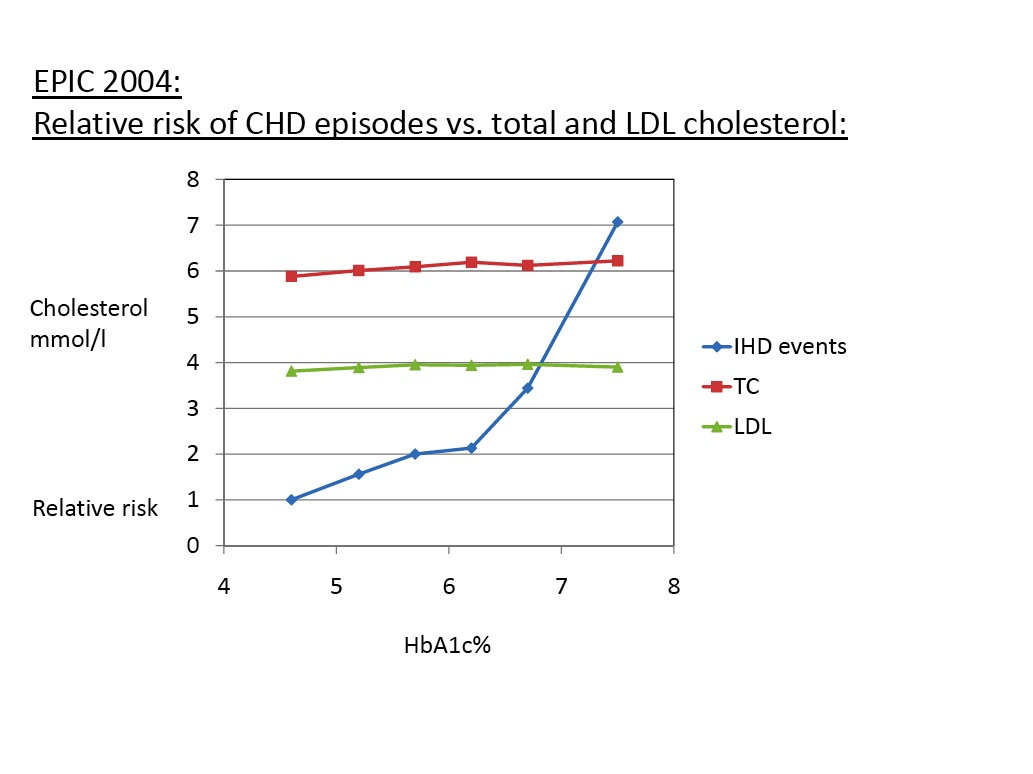
Notice that as HbA1c increases, particularly over about 6.2%, the risk of a cardiac episode increases dramatically.
Also notice that there is no indication that high cholesterol with a low HbA1c increases the risk of cardiac mortality.
In other words, an important goal for any heart disease prevention diet should be to minimize HbA1c. How do you do that? Minimize blood glucose -- and the most effective solution there is to reduce simple carbs and increase fat.
Friday, 26 March 2010
Measuring your nutrient levels
I have found that detecting and then correcting nutrient deficiencies is a very important aspect of treating a number of otherwise "resistant" health conditions. Accurate measurement of your current status is the first step.
Measuring nutrient levels is complicated by the fact that enzymes and molecular pumps in cell walls selectively create concentration gradients between the plasma and the inside of the cell for some nutrients. In general, measuring the level inside red blood cells, as opposed to in the plasma, results in the measurements that most accurately reflect functional ability. However, there are exceptions—for example magnesium, for which there isn’t really a good blood test (a loading test is the best measurement).
[[MORE]]There’s also another class of tests related to “functional” levels of both vitamins and minerals. I know a couple of docs and researchers that swear by those tests, but my personal experience with them hasn’t been very good (and they’re expensive).
You can get some sense of deficiencies from looking at trace mineral levels in hair. The advantage is that the test is cheap and easy to do. Unfortunately, those results are easily contaminated (even from things like chromium on the blades of scissors used to cut the hair, as well as shampoo contents). Mineral levels in hair are generally most useful for detecting heavy metals.
Here are links to a few labs that do the right kind of tests:
http://www.doctorsdata.com/home.asp
http://www.metametrix.com/content/Home
http://www.genovadiagnostics.com/
Correcting deficiencies is a whole other art and science, because so many factors are involved: everything from stomach acid to minerals that compete, to gut dysbiosis, to the form of supplement that’s used, associated microcontaminants, competing foods or drugs (including alcohol), etc, etc.
Thursday, 11 March 2010
Gluttony, sloth and metabolic syndrome
There was a fabulous post by Peter at Hyperlipid today. I enjoyed his figures so much, I had to pass them on.
http://high-fat-nutrition.blogspot.com/2010/03/getting-fat-is-good-official.html
The issue here is correctly identifying cause and effect; something which I’ve noticed is a common problem in many aspects of modern society.
[[MORE]]Here's the diagram from the original paper Peter mentions, which claims that gluttony and sloth cause hyperinsulinemia, which in turn causes a host of additional maladies:

Here's Peter's alternative diagrams, which more accurately represent cause and effect:


http://high-fat-nutrition.blogspot.com/2010/03/getting-fat-is-good-official.html
The issue here is correctly identifying cause and effect; something which I’ve noticed is a common problem in many aspects of modern society.
[[MORE]]Here's the diagram from the original paper Peter mentions, which claims that gluttony and sloth cause hyperinsulinemia, which in turn causes a host of additional maladies:
Here's Peter's alternative diagrams, which more accurately represent cause and effect:
Saturday, 6 March 2010
Fatigue, mental illness and diet
Based on years of personal experience, I'm increasingly convinced that some forms of fatigue and mental illness, particularly things like depression, anxiety and insomnia, are caused in large part by not getting enough animal products in your diet -- especially Vit B-12 and saturated fat. B-12 is directly involved with many aspects of brain and nervous system function, and saturated fats are precursors for a number of hormones that affect mood and energy.
[[MORE]]One thing to watch for on the fatigue side is that after a while, Paleo can cause what used to be "subclinical" hypothyroidism to come to the surface. If you're eating right, yet still tired all the time, even when you get plenty of sleep, I would highly recommend having your thyroid levels checked. You might also look at supplementing with a little iodine, particularly if you've stopped using iodized salt.
The best thyroid tests are Free-T3, Free-T4 and ultra-sensitive TSH. See:
http://johndommissemd.com/page/368509
for some info along those lines. You might also try measuring your basal body temperature before you get out of bed in the morning. If it's regularly a degree or more below 98.6, that's suggestive of hypothyroidism.
There are, of course, a number of other issues that can also be at play: everything from sleep apnea (snoring or a morning sore throat are common symptoms) to nutrient deficiencies. Magnesium is by far the most common nutritional deficiency, and correcting it often helps hugely, partly because it allows you to more fully relax, both mentally and physically. Eliminating gluten can help, too, by allowing leaky gut to heal, which then helps you absorb nutrients better while also reducing food allergies.
Treating a cold
I hate going to the doctor, particularly for an illness like a cold that normally falls short of needing prescription medication. One thing I do on my own is to take some vitamin D3 when I first feel cold symptoms coming on. It's a powerful immune system booster, even better than vit C. You can take up to 50,000 IU per day for a few days, or, better yet, get out in the sun, provided it's not winter or overcast.
Another important thing to do is to stay hydrated. With a runny nose and coughing up lots of phlegm, it's easy to get dehydrated. Water will help keep the mucus thin, which in turn helps prevent stagnation and infection.
For a sore throat, I've also found zinc lozenges to be effective about half the time.
[[MORE]]I think it's a good idea to limit physical activity when you're sick. When your body is working hard to fight off an infection, the last thing it needs is to have to divert resources to repairing systems that may have been slightly damaged (as muscles are when heavily loaded), or to dispose of any extra waste products that were generated during the associated metabolic processes. For the latter reason, I don't over-eat while I'm sick. Limiting activity doesn't necessarily mean bed rest, though. It seems like some movement to keep the lymph system active would also be a good idea (since lymph fluid doesn't have a pump of its own, and so is only moved around by physical activity).
I'm also very skeptical about treating fevers, unless they get high enough that they might damage the brain (105+). Fevers are one of the body's natural ways of killing the invaders; why would you want to suppress that?
Thursday, 4 March 2010
Definition of processed foods
When should you consider foods to be "processed"? One suggestion I've heard is that processed foods are those whose character has changed from the original. However, I think that's misleading.
Some foods can undergo a change of character, and yet still be perfectly healthy. The creation of butter by whipping cream for an extended time is one example. Even most cooking processes will change the character of the original foods in some way.
One type of food processing that’s not healthy is when it’s natural shelf life is over-extended through mechanical or chemical treatment. One way that’s done is by removing some of the key nutrients that potential pests like to eat. For example, potassium can be replaced with sodium (salt); unfortunately, many micronutrients are removed at the same time. The final result is that while the caloric content of the food may remain, much of the nutritional content does not.
Another type of food processing is when food is combined with non-foods. For example, chemicals galore, for purposes that range from changing the food’s texture or color to changing its taste or enhancing shelf-life.
How about this definition: I consider foods to be “processed” when they either have essential nutrients removed from them, or when they are combined with non-foods.
Tuesday, 16 February 2010
Organic or not?
Pesticide residues are found in the flesh of fruits and vegetables, not just on the exterior--some foods are more susceptible to retaining residues than others.
Although many pesticides are initially sprayed on the surface of the plants, they are eventually rinsed off by rain or irrigation; they then flow into the soil and are absorbed by the plant’s roots. Some “systemic” pesticides are applied directly to the soil, and not to the surface of the plant at all. There are also gas “fumigants,” which can be applied after harvesting to help speed up ripening and to control rot and hard-to-kill pests; they generally need to penetrate the plant material deeply to be effective.
[[MORE]]“Organic” is not the same thing as “pesticide free.” Many organic foods still use pesticides, although the ones used are generally considered to be “less toxic” (whatever that really means), and the detectable residues are generally lower than in conventionally grown food. In fact, even food labeled “pesticide free” often isn’t free of residues (unless it’s labeled as No Detectable Residue [NDR]), due to drift and residues from previous crops in the same fields. That’s yet another reason to grow (or raise) some of your own food, or to buy from a local farmer you trust, if you can.
Here’s a link to a paper with some details:
http://www.consumersunion.org/food/organicsumm.htm
Monday, 15 February 2010
Is fructose really that bad?
Here are links to a couple of papers about fructose:
Fructose consumption as a risk factor for non-alcoholic fatty liver disease
http://www.ncbi.nlm.nih.gov/pubmed/18395287
Fructose overconsumption causes dyslipidemia and ectopic lipid deposition in healthy subjects with and without a family history of type 2 diabetes
http://www.ncbi.nlm.nih.gov/pubmed/19403641
[[MORE]]Nonalcoholic Fatty Liver Disease in Humans Is Associated with Increased Plasma Endotoxin and Plasminogen Activator Inhibitor 1 Concentrations and with Fructose Intake
http://jn.nutrition.org/cgi/content/full/138/8/1452
Here’s a comment by Dr Kurt Harris about fructose:
http://www.paleonu.com/panu-weblog/2009/7/16/calorie-restriction-partial-restoration-not-enhancement.html
As Kurt says, small amounts of fruit are OK. As with all toxins or poisons, the issue is the dose; if it’s small enough, and if the body is given enough time to heal between doses, then it’s not a problem. That’s also part of the logic behind only eating fruit in-season.
Another point about sweet tasting foods: even if they are sweet because of artificial sweeteners, they will still provoke an insulin response. That’s even true for toothpaste.
Although liver disease as such isn't widespread, type 2 diabetes and obesity certainly are--and their underlying cause may be related to liver damage. According to an MD I work with, elevated liver enzymes are very common with type 2 diabetics (also with Syndrome X), and that is generally a result of having a fatty liver.
What about honey, which is high in fructose? Due to its carbohydrate content and sweetness, it also has a significant insulin-releasing effect.
Having said that, my great-great-uncle ate the stuff by the gallon and swore that it cured every illness under the sun—yet he lived well into his 90s (one of the oldest of my male relatives).
Of course, anecdotal information proves nothing, but even so I suspect that the jury is still out on the full range of health effects of honey. I don’t eat much of it myself, but I do eat a little; I treat it like fruit, to be used occasionally, and only in relatively small quantities—as opposed to HFCS or cane sugar, which I avoid entirely.
Fructose consumption as a risk factor for non-alcoholic fatty liver disease
http://www.ncbi.nlm.nih.gov/pubmed/18395287
Fructose overconsumption causes dyslipidemia and ectopic lipid deposition in healthy subjects with and without a family history of type 2 diabetes
http://www.ncbi.nlm.nih.gov/pubmed/19403641
[[MORE]]Nonalcoholic Fatty Liver Disease in Humans Is Associated with Increased Plasma Endotoxin and Plasminogen Activator Inhibitor 1 Concentrations and with Fructose Intake
http://jn.nutrition.org/cgi/content/full/138/8/1452
Here’s a comment by Dr Kurt Harris about fructose:
http://www.paleonu.com/panu-weblog/2009/7/16/calorie-restriction-partial-restoration-not-enhancement.html
Large amounts of fructose (Fru) is one of the elements of our current (neolithic) diet that deviates substantially from the EM2 we evolved under. For a variety of reasons, Fru functions as a metabolic poison and is much worse than glucose.
Excess Fru raises your triglycerides, can cause inflammation in your liver, and causes insulin resistance independent of insulin levels. Big boluses of Fru are sometimes not digested completely. This can cause bacteria to grow in your upper bowel which is not good.
Look at Fru like cigarettes - if you smoke one cigarette a week it will probably not hurt you. The problem is not the one smoke, it is the reinforcement of the desire that leads you to smoke the whole pack.
If you can keep total carbs at 10% and some of that is sucrose, that may not be a problem. But, people like fruit because its sweet, and if you tell them fruit is healthy, they tend to eat a lot of it.
Fruit is not healthy, it is something that tastes good that you can tolerate in small amounts.
The vitamins in sweet fruits can't hold a candle to other foods. The "antioxidants" are probably more than balanced by Fru itself, which is actually an "oxidizing agent"!
As Kurt says, small amounts of fruit are OK. As with all toxins or poisons, the issue is the dose; if it’s small enough, and if the body is given enough time to heal between doses, then it’s not a problem. That’s also part of the logic behind only eating fruit in-season.
Another point about sweet tasting foods: even if they are sweet because of artificial sweeteners, they will still provoke an insulin response. That’s even true for toothpaste.
Although liver disease as such isn't widespread, type 2 diabetes and obesity certainly are--and their underlying cause may be related to liver damage. According to an MD I work with, elevated liver enzymes are very common with type 2 diabetics (also with Syndrome X), and that is generally a result of having a fatty liver.
What about honey, which is high in fructose? Due to its carbohydrate content and sweetness, it also has a significant insulin-releasing effect.
Having said that, my great-great-uncle ate the stuff by the gallon and swore that it cured every illness under the sun—yet he lived well into his 90s (one of the oldest of my male relatives).
Of course, anecdotal information proves nothing, but even so I suspect that the jury is still out on the full range of health effects of honey. I don’t eat much of it myself, but I do eat a little; I treat it like fruit, to be used occasionally, and only in relatively small quantities—as opposed to HFCS or cane sugar, which I avoid entirely.
Sunday, 7 February 2010
Managing toxic overload
Organohalides (including pesticides) and many other organic toxins are lipid soluble, both in animals and in man -- and some of those chemicals are thryo-toxic (the thyroid gland is particularly sensitive to many xenobiotics); some are also carcinogenic.
So, when you eat more fat, everything else being equal, you are also increasing your intake of fat-soluble toxins. Eating organic helps, but it isn't a cure-all, due to the prevalence of toxins in the environment.
[[MORE]]The situation is compounded if you start losing weight or when you begin exercising after a long period of not doing do, because the toxins that your body has worked hard to sequester in your fat get released into the blood, which can result in fatigue, brain fog, skin rashes, immune system issues, and a number of other problems.
One way to address this issue (other than donating blood, which clearly only addresses part of the problem) is to stimulate the activity of certain detox enzymes, such as gluthathione S-transferase, and to increase excretion of bile (a fat-rich compound that transports fat-soluble toxins). This can be done by introducing coffee into the lower part of the large intestine (low-volume coffee enema), where caffeine and several related compounds are absorbed into the portal vein and carried directly to the liver, bypassing full-body circulation. Once in the liver, the choleretic effect and the associated increase in enzyme activity rapidly clears the blood. This can be particularly effective after exercising, and can also help shorten recovery time.
As with iodine supplements, coffee enemas are another key component of Dr Max Gerson's successful (and controversial) cancer treatment program. Here's a link to an article with some background:
http://www.gersonhawaii.us/gersonarticle5.html
Wednesday, 20 January 2010
Safety of MRI tests and contrast agents
Are MRI tests safe?
The usual MRI contrast agent is Gadolinium-based, and is not radioactive. MRI machines themselves use magnetic fields and not radiation. Fortunately, it's not possible to have an “overexposure” of magnetism. CAT or PET scans are a much different story, though, since they do use radiation.
I’ve had a number of MRIs, and I consider them to be the safest of the available imaging technologies. If you are having symptoms that warrant the test, then in my opinion it would be foolish to deny the use of a contrast agent if the study was ordered using one. I’m not saying contrast is zero-risk, but the risk of misdiagnosis without contrast (when needed) seems to me to be much higher than the risk of the contrast itself being a problem. I asked a radiologist about the risks once, and he said that although they have everyone sign a liability waiver form due to the theoretical risk, that he personally had never seen anyone react adversely to the contrast agent, nor had any of his co-workers.
The issue is that without contrast, many physical structures and details simply aren’t visible. That also means that a more correct response to not seeing anything with a non-contrast test would be to order one with contrast, not to just say that you’re all done. And if they do see something without contrast, they would have generally seen more details and therefore know more about what’s happening if it had been done with contrast.
However, not all exams require contrast; it depends on which part of the body is being imaged.
Tuesday, 5 January 2010
Managing allergies
I went through a number of years of having severe allergies. However, I was eventually able to largely cure myself; today I’m 90% better than I used to be. A few things I learned along the way that might be helpful:
- Allergies are, of course, an immune system issue; immune system support is therefore essential. In addition to avoiding allergens, it's also critical to reduce your exposure to toxins. Even micro amounts that wouldn't bother a healthy person can be very damaging to the immune system. This includes things like pesticides, formaldehyde, perfumes, cleaning compounds, etc.
- Long-term allergies are almost always associated with poor nutrient status. Magnesium, in particular, is extremely important, but so are all micronutrients. "Natural Calm" is a good source of magnesium. A good broad-spectrum multivitamin can be extremely helpful, even though they can take a very long time to have a full effect (on the order of several years). "Beyond Any Multiple" (BAM) is a good one.
- The combination of the above two items means that supplement and food selection is very important: organic, pesticide-free food is crucial. The issue with supplements is one of purity and freedom from microcontaminants. Brands such as Thorne, Jarrow, Carlson, Now and Country Life are good. I’ve had terrible luck with Twin Labs and Allergy Research Group.
- Myself and many of my highly-allergic friends (but not everyone) have found certain "neutralizers" to be extremely valuable. These are temporary quick-fix things you can do to turn off an acute allergic reaction. The one that works best for me is Alka Seltzer Gold. It works is by rapidly alkalinizing the body, which has a normalizing effect on the immune system. I can be feeling absolutely terrible, exhausted, brain fogged, ready to collapse, and 5 minutes after consuming the Alka Gold, I feel completely normal.
- You might consider having yourself checked for heavy metals. High levels can have a very damaging effect on the immune system.
- Yeast overgrowth can be another issue. The yeast can cause the gut wall to become leaky, so that small particles of food enter the blood, which then provokes allergies. A very low carb or even zero carb diet (Paleo or Paleo-like) can be a big help there, although you may also need to take an anti-yeast medicine such as Nystatin for a while to completely clear yourself out.
- Hormone levels are another thing that often seems to get tweaked when allergies flare up. In my experience, they often seem to be a precursor to more severe health issues. Thyroid issues, in particular, are very common—probably in part as a result of not getting enough iodine, which is already low in most people’s diet. There’s a negative feedback loop here, because you also need adequate levels of thyroid hormone in order to be able to absorb nutrients from your food. Testing and diagnosis of thyroid levels is (surprisingly) a bit controversial. One easy at-home test is to measure your basal body temperature, before you get out of bed in the morning. If it’s more than a degree low, that is almost certainly indicative of a thyroid problem.
- Active detox programs can help to significantly speed up recovery time. They aren’t fun, though.
[[MORE]]
Subscribe to:
Posts (Atom)